


30 Apr What Families Fear Most About Daily Care at Home… And What Actually Happens
For many families, this is the hardest part. Not the decision to get help. Not the scheduling. Or even the cost. It is the idea of daily care at home. Bathing. Dressing. Mobility. Personal routines. These feel private. Personal. Even uncomfortable to talk about.
So families hesitate. They imagine worst-case scenarios. They worry about dignity, awkwardness, and how their parent will react. That hesitation is normal, but it also creates a gap between what people fear and what actually happens.
Let’s close that gap.
Why Daily Care at Home Feels So Difficult to Accept
Before you understand the care itself, you need to understand the resistance behind it.
It Feels Like Losing Independence
Many seniors hear “help with daily activities” and immediately think, “I’m no longer capable.” That thought lands hard. Even when help would make life easier, it can feel like giving something up.
It Feels Too Personal
Daily routines are exactly that. Personal.
Getting dressed. Using the bathroom. Bathing. These are not things people want help with from a stranger, and that discomfort is real.
Families Picture It the Wrong Way
Most people imagine something clinical, rushed, or awkward. That image often comes from hospitals or facilities, not from what actually happens at home.
In reality, daily care at home looks very different.
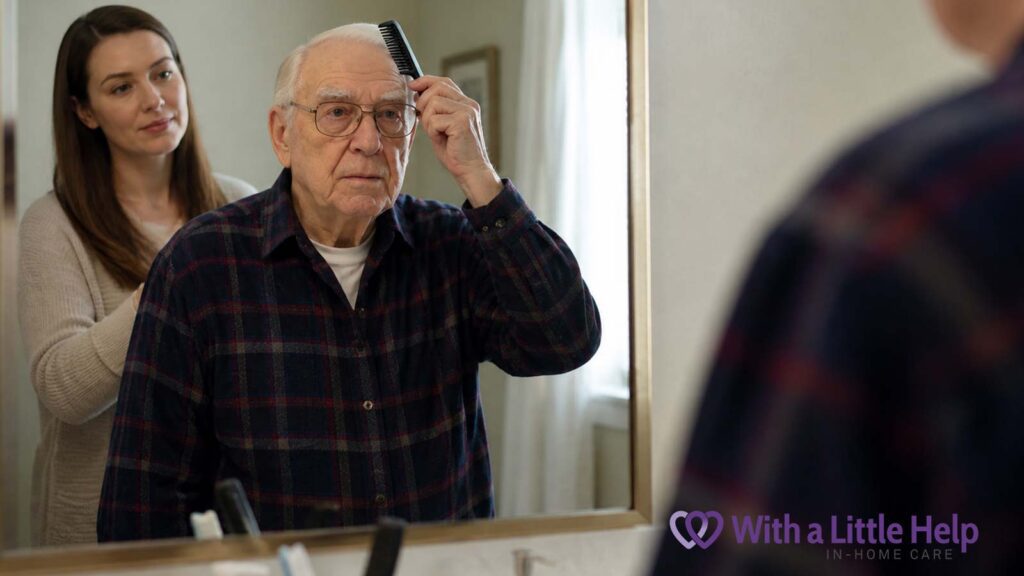
What Daily Care at Home Actually Looks Like
The reality is far more human than people expect.
Care at home is slower. More respectful. More flexible. Most importantly, it is built around the person, not a schedule or system.
It Starts Small
Very few families begin with full, hands-on support. Instead, care often starts with simple help: steadying someone while they walk, assisting with shoes, or helping with meals.
These small steps matter. They build comfort first. Trust comes before anything more personal.
It Moves at the Client’s Pace
Caregivers do not rush in and take over. They ask how things are normally done and what kind of help feels acceptable.
That conversation keeps the senior in control. It also reduces resistance, because the process feels collaborative instead of imposed.
It Respects Privacy
Good caregivers know how to support without taking over. They give space when possible, maintain modesty, and explain what they are doing before they do it.
This is not about doing everything for someone. It is about supporting what they already do, in a safer and more sustainable way.
It Becomes Routine
At first, it may feel unfamiliar. That is expected.
Then something shifts. The caregiver becomes a familiar face. The routine becomes predictable. What once felt intrusive starts to feel normal.
What Families Notice After Care Begins
This is where expectations change quickly.
Families often expect resistance to continue. Instead, they notice small but meaningful improvements within the first few weeks.
Relief Comes First
Daily routines become smoother. Mornings feel less rushed. There are fewer close calls with balance or mobility.
Even a small amount of support can reduce a surprising amount of stress.
Relationships Improve
When family members handle every task, interactions tend to become task-focused. There is less patience, more urgency, and often more tension.
When a caregiver takes over those responsibilities, something important shifts. Family members get to be present again, not just responsible.
Seniors Often Feel Better Too
This surprises people.
Many seniors who resisted help at first begin to relax once they experience consistent, respectful care. They conserve energy, feel less frustrated, and often maintain independence longer.
The right support does not take control away. It stabilizes it.
What Daily Care at Home Includes
While every situation is different, daily care at home typically includes a mix of support that keeps life moving smoothly.
Personal Care Support
This includes help with bathing, dressing, and grooming. These are often the most sensitive areas, which is why they are introduced gradually and handled with care.
Mobility Assistance
Caregivers help with walking, transfers, and fall prevention. This reduces risk while allowing seniors to stay active.
Daily Routine Support
Support may include meal preparation, light housekeeping, and medication reminders. These are the tasks that often become difficult first.
Companionship
Just as important as the physical help, caregivers provide conversation, routine, and emotional support. That connection plays a major role in overall well-being.

Common Fears vs Reality
It helps to address the biggest concerns directly.
“It Will Be Awkward”
At first, maybe a little. That is normal.
But routine and familiarity take over quickly. What feels uncomfortable at the beginning rarely stays that way.
“They Will Lose Their Independence”
In most cases, the opposite happens. Support allows seniors to stay at home longer and maintain more control over their daily lives.
“They Will Hate It”
Some resistance at the beginning is common. However, many seniors adapt faster than families expect once they experience consistent care.
“It Means Things Are Getting Worse”
Not necessarily.
Often, it means families are stepping in early enough to prevent bigger problems later.
Why Starting Earlier Makes a Difference
Waiting too long creates pressure. Everything feels urgent, and decisions feel forced.
Starting earlier changes the experience. Care can be introduced gradually. Trust builds over time. Routines develop naturally instead of being rushed.
That difference matters more than most families expect.
A More Realistic Way to Think About It
Instead of seeing daily care at home as a loss, it helps to see it as a shift.
From struggling through tasks and risking injury to having steady, reliable support. From constant stress to more manageable routines.
That shift is what makes care sustainable over time.
A Better Next Step
If your family feels hesitant about daily care at home, that is normal. Most families feel that way at first.
The key is not to solve everything at once. It is to start the conversation and understand what support might look like in your situation.
At With a Little Help, we work with families across Seattle and nearby communities to introduce care in a way that feels respectful, gradual, and practical.
Sometimes the biggest change is simply seeing what this care actually looks like in real life. From there, the decision becomes much easier.
Contact us today for a free evaluation. Daily care at home may be the solution you’re looking for.
