


27 Aug Does Your Aging Parent Need Overnight Care? 10 Signs to Watch For
At 2:00 in the afternoon, Dad seems fine.
He makes his own lunch. He moves around the house. He calls a friend. When you stop by after work, nothing seems particularly concerning.
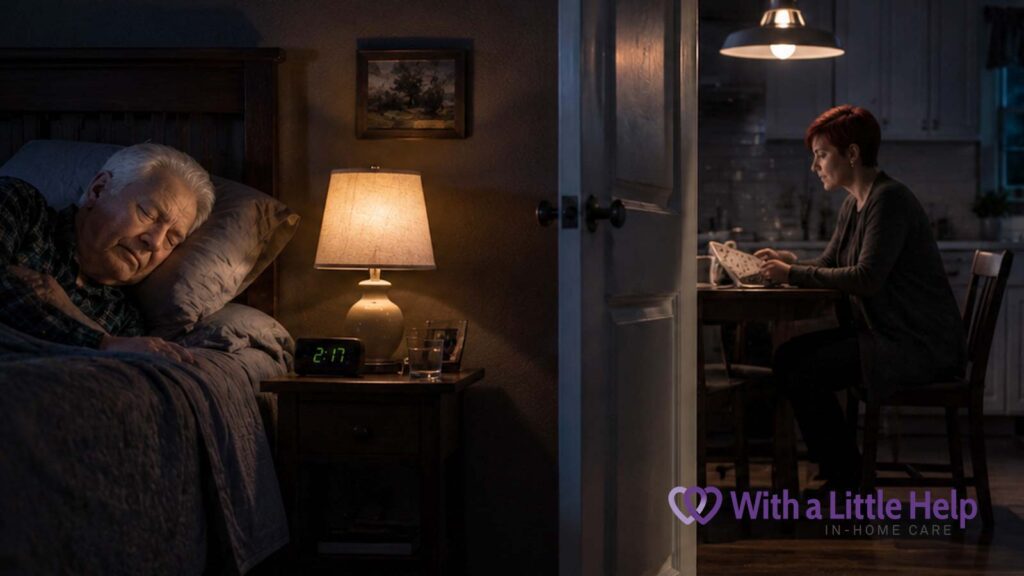
At 2:00 in the morning, things can look very different.
He wakes up disoriented and isn’t sure where the bathroom is. He gets out of bed without his walker. Or maybe he knows exactly where he is, but his legs are stiff after several hours in bed and he’s much less steady than he was during the day.
For some older adults, nighttime exposes challenges that aren’t obvious during daylight hours. And because family members usually aren’t there to see them, those challenges can continue for quite a while before anyone realizes additional support might help.
Overnight care for seniors provides another option. It can give an aging parent assistance during the hours when they need it while allowing family members to sleep knowing someone is there.
But how do you know when it’s time?
10 Signs It May Be Time for Overnight Care for Seniors
One difficult night doesn’t necessarily mean your parent needs overnight care. Instead, pay attention to patterns. If several of these situations sound familiar, it may be worth discussing whether nighttime support belongs in your loved one’s care plan.
1. Nighttime Bathroom Trips Have Become Risky
Getting up to use the bathroom sounds routine until balance and mobility begin to change.
A senior may wake up groggy, move through a dark room, forget to use a cane or walker, or struggle to get on and off the toilet safely. If your parent already has a history of falls or unsteadiness, those middle-of-the-night trips deserve particular attention.
An overnight senior caregiver can be there to provide appropriate mobility and personal care assistance when your loved one wakes.
2. They Are More Confused at Night
Some seniors with memory loss become noticeably more confused or anxious later in the day or after waking during the night.
A familiar bedroom may suddenly seem unfamiliar. They may believe it’s morning when it’s still the middle of the night or become frightened because they don’t understand why the house is dark and quiet.
Having a familiar caregiver nearby can provide reassurance, help reorient them, and guide them safely back into their nighttime routine.
3. They Wander at Night
Nighttime wandering deserves attention.
A senior may walk around the house repeatedly, attempt to leave, or set off to complete a familiar activity at an inappropriate hour. Someone with memory loss might genuinely believe it’s time to go to work or walk to the store.
If wandering has become part of the nighttime routine, families should talk with their loved one’s healthcare provider and consider whether greater supervision is needed.
4. Getting Into or Out of Bed Requires Help
Sometimes the problem isn’t memory at all.
Arthritis, weakness, balance problems, or limited mobility can make getting into and out of bed difficult. The same senior who moves reasonably well during the day may struggle considerably after lying down for several hours.
If your parent needs physical assistance at night, hoping they’ll simply stay in bed until morning isn’t much of a plan.

5. A Spouse Is Providing More Help Than They Safely Can
This one can sneak up on families.
Mom needs help getting to the bathroom, so Dad helps her. That’s what spouses do.
Except Dad is 81.
Helping another adult stand, transfer, or walk several times during the night can put both people at risk. Even if the spouse is physically capable of providing assistance, repeatedly interrupted sleep can take a toll.
Overnight care can support both partners, not just the person with greater care needs.
6. Your Parent Needs Personal Care During the Night
Care needs don’t always respect business hours.
Some seniors need assistance with toileting, changing clothes or bedding, repositioning, or other personal care during the night. Trying to manage those needs alone may be uncomfortable, difficult, or unsafe.
An overnight caregiver can make nighttime personal care part of the senior’s normal routine rather than an ordeal everyone dreads.
7. Coming Home From the Hospital Has Changed the Picture
A hospital stay, surgery, fall, or illness can temporarily change what a senior can safely manage.
Someone who was independent two weeks ago may return home weaker and less steady. Nights can be especially challenging because there are fewer people around and the senior may still be adjusting to changes in mobility and routine.
Overnight care doesn’t have to mean a permanent change. It can provide additional support during recovery and then be adjusted as strength and independence return.
8. Someone in the Family Is Always “On Call”
Maybe your parent doesn’t live with you, but your phone stays on the nightstand with the volume turned all the way up.
You know they might call.
So you never quite stop listening for it.
Or siblings rotate nights at Mom’s house. A daughter sleeps on the couch three nights a week. Everyone technically manages, but nobody is getting enough rest.
At some point, the question isn’t simply whether the family can continue doing it. It’s whether the arrangement is sustainable.
9. You Keep Checking on Them During the Night
Sometimes the clearest warning sign is your own behavior.
If you live with your parent and repeatedly get up to make sure they’re okay, ask yourself why.
Are you worried they’ll fall? Wander? Need help getting to the bathroom? Are you listening for movement in the hallway?
That anxiety may be telling you something about the level of nighttime support your loved one now needs.
10. Nobody Is Getting Enough Sleep
This may be the most overlooked sign of all.
Caregiving doesn’t stop mattering just because the person providing it is exhausted. In fact, exhaustion can make an already difficult situation harder for everyone.
A spouse who wakes four times every night still has to function the next morning. So does the adult child sleeping in the guest room with one ear open.
Overnight care can give families something remarkably valuable: the ability to actually go to bed. can complement each other.
Does Needing Overnight Care Mean Someone Needs 24-Hour Care?
Not necessarily.
That’s an important distinction.
Some seniors remain active and relatively independent during the day but need more assistance at night. Others already receive caregiver visits during the day and discover that nighttime has become the missing piece.
A personalized care plan should reflect when support is actually needed rather than automatically assuming that more care is required at every hour of the day.
Needs can also change. Overnight care may become useful after a hospitalization and then decrease during recovery. For another senior, nighttime assistance may become a regular part of safely remaining at home.
What Can an Overnight Caregiver Help With?
The exact support depends on the senior and their personalized care plan, but overnight caregivers may assist with needs such as personal care, mobility, nighttime routines, companionship, and reassurance.
Just as importantly, someone is present.
For a senior who wakes confused, a spouse who can no longer safely provide physical assistance, or a daughter lying awake waiting for the phone to ring, that presence can change the entire night.
Overnight Care Supports More Than the Senior
Families sometimes think of professional caregiving as replacing something they ought to be doing themselves.
Overnight care is a particularly good example of why that isn’t true.
A daughter who sleeps through the night can still spend Saturday with her mother. A husband who isn’t getting up repeatedly can have more energy to enjoy breakfast with his wife. Family members can return to being spouses, sons, and daughters instead of trying to cover every hour of care themselves.
Professional support doesn’t diminish the family’s role. It can make that role sustainable.
A Better Night Can Make for a Better Day
The need for overnight care for Seattle seniors isn’t always obvious. Often, the clues appear gradually: one difficult bathroom trip, a little more confusion, another night on Mom’s couch, another morning when everyone is exhausted.
Look at the pattern rather than waiting for a crisis.
The right amount of overnight support can help a senior remain safer and more comfortable at home while giving the rest of the family the reassurance and rest they need.
If nighttime has become the hardest part of caring for someone you love, contact With a Little Help to discuss whether overnight care for seniors could be the right addition to your family’s personalized care plan.
