

16 Sep What Services Are Included in In-Home Care?
“In-home care” covers a surprisingly broad range of help.
It might mean preparing lunch and doing a load of laundry for someone who still manages most of life independently. Another senior may need help bathing, dressing, and moving safely around the house. Someone living with dementia might benefit from companionship, a familiar routine, and someone nearby to make sure the stove doesn’t get turned on at the wrong time.
Often, it’s all of those things combined.
That’s one of the advantages of in-home care. Rather than choosing a single service, families can build a personalized care plan around the things their loved one actually needs help doing.
So, what can an in-home caregiver help with?
Personal Care and Everyday Routines
Personal care includes some of the most basic activities of daily life. They’re also some of the first things families notice when an older adult begins having difficulty living independently.
Bathing, Dressing, and Grooming
A caregiver can provide appropriate assistance with daily routines such as bathing, getting dressed, and grooming.
Sometimes a senior can still do most of these things independently but needs a little help. Buttons become difficult with arthritis. Stepping into a shower feels less secure than it once did. Bending to put on socks and shoes becomes a challenge.
Other people need more hands-on assistance.
Personal care can be an uncomfortable subject for families to discuss, particularly when an adult child realizes Mom or Dad needs help with something as private as bathing. Professional caregivers approach these tasks as a normal part of care while respecting the person’s privacy, preferences, and dignity.
Toileting and Incontinence Care
Yes, in-home caregivers can also help with toileting and related personal care needs.
This might include assistance getting safely to and from the bathroom, managing clothing, or providing other appropriate personal care.
For many families, this is an important threshold. A spouse may no longer be physically able to provide the necessary assistance. An older adult may also feel more comfortable receiving intimate personal care from a professional than from a son or daughter.
There’s nothing unusual or embarrassing about needing this kind of help. Bodies change. Care needs change with them.
Mobility and Moving Safely Around the Home
Getting from the bedroom to the kitchen can become a significant task when strength, balance, or mobility declines.
Caregivers can provide appropriate mobility assistance as seniors move through their normal routines. That might mean getting up from a chair, moving around the home, or accompanying someone who uses a cane or walker.
Mobility assistance often connects with other types of care. Getting to the bathroom, taking a shower, preparing for bed, or leaving for an appointment may all require some level of support.
Meals and Help Around the House
Remaining at home involves more than personal care. Someone also has to keep everyday life moving.
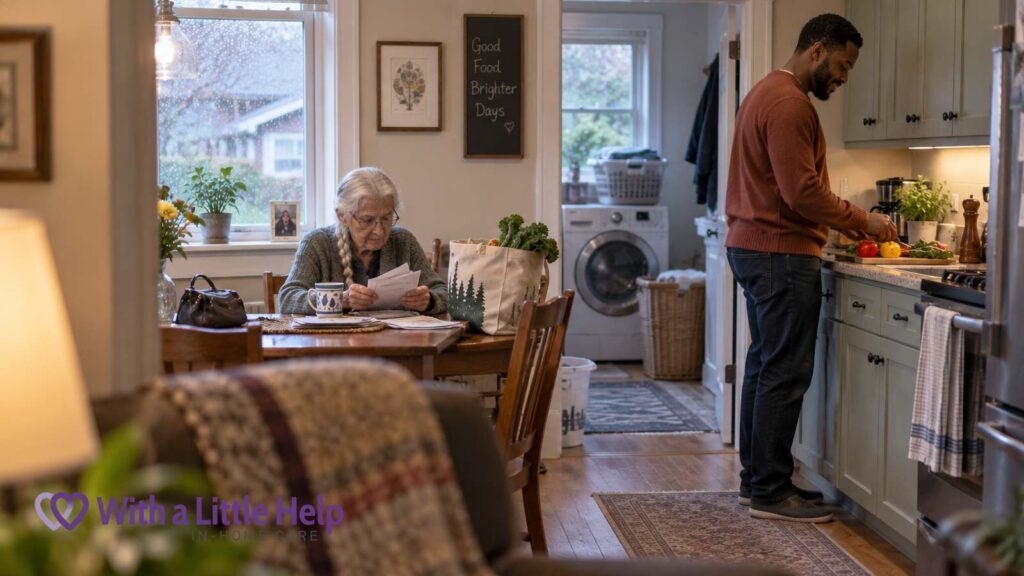
Meal Preparation
Cooking often becomes more difficult before families realize there’s a problem.
Standing at a counter may be tiring. Carrying a heavy pan can become unsafe. Memory problems can make using the stove more complicated. Or a senior simply stops wanting to cook for one person.
An in-home caregiver can help prepare meals and make eating regularly easier.
That doesn’t mean every meal needs to become a carefully plated production. Sometimes lunch is soup and a sandwich. The important thing is that food gets prepared and the senior actually eats it.
Light Housekeeping and Laundry
In-home caregivers aren’t housecleaning services, but they can help with the everyday household tasks connected to the client’s care and routine.
That can include things such as dishes, laundry, changing bed linens, tidying commonly used areas, and cleaning up after meals.
The distinction is useful. A caregiver might wash the senior’s clothes or clean the kitchen after preparing lunch. They aren’t there to deep-clean the garage or wash every window in the house.
Companionship Is Part of In-Home Care
Some of the most valuable things a caregiver does don’t look much like “care” at all.
Conversation and Shared Activities
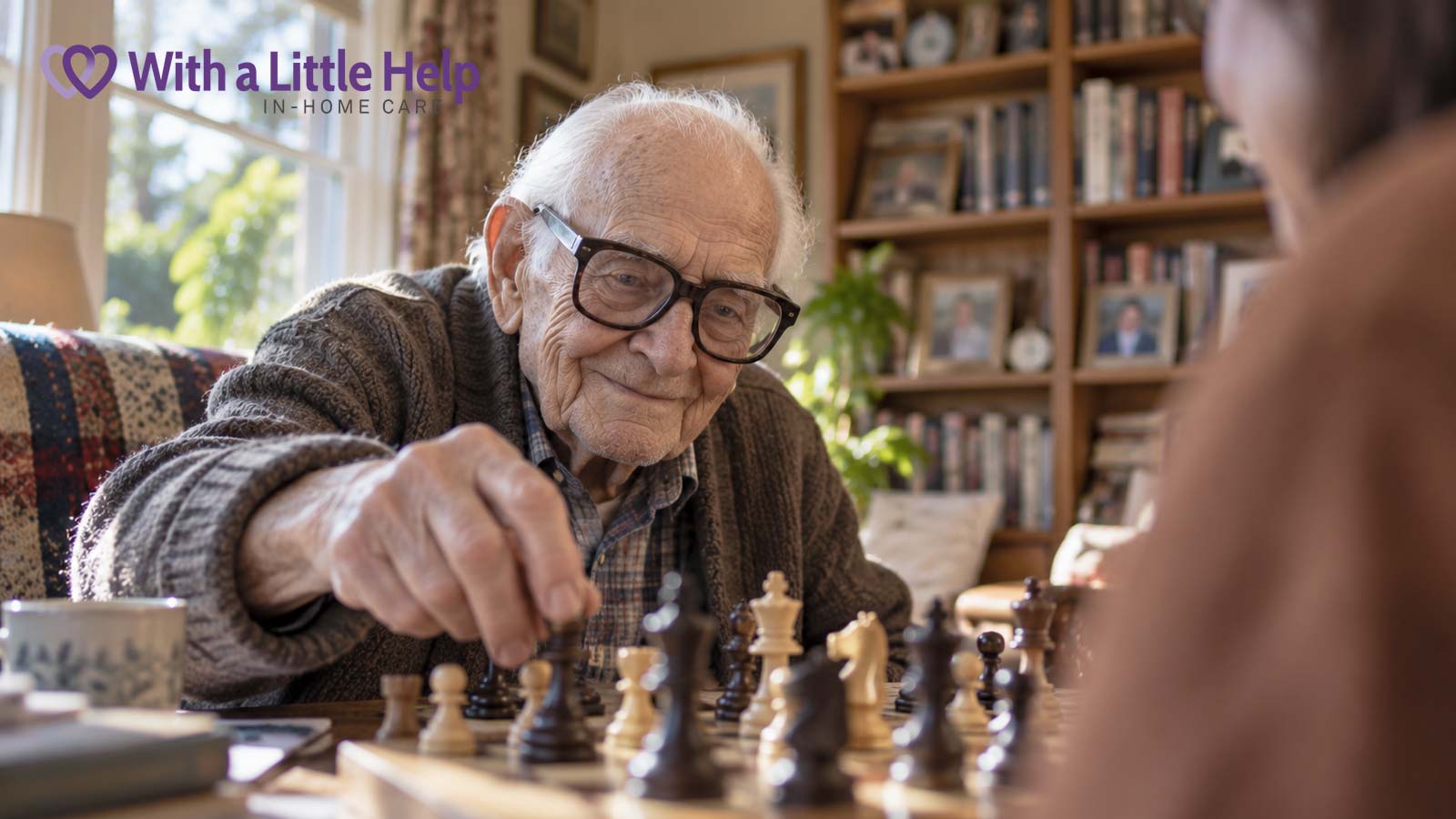
A caregiver might sit down for coffee and conversation. They may play cards, work on a puzzle, look through old photographs, go for a walk, help with a hobby, or simply provide another person in the house.
That social connection can become increasingly important when a senior stops driving, loses a spouse, or finds it harder to maintain previous activities and friendships.
Companion care isn’t filler between more important tasks. Human connection is part of helping someone continue enjoying life at home.
Getting Out of the House
Companionship doesn’t have to happen in the living room.
Depending on the care plan, a caregiver might accompany a senior on a walk, go with them to lunch, help them shop, or support them while they continue activities they enjoy.
Seattle isn’t much use if you never get beyond your front door.
Transportation, Errands, and Appointments
Driving is one of the biggest changes many older adults face.
Giving up the keys doesn’t eliminate doctor’s appointments, groceries, haircuts, lunches, church, family visits, or everything else happening outside the home.
Transportation as Part of a Care Plan
With a Little Help can provide transportation as part of a broader in-home care plan.
That’s an important distinction. Transportation isn’t offered as a standalone taxi or driving service. Instead, it can be incorporated into a caregiver’s scheduled time with the client.
A caregiver might help someone get ready for an appointment, accompany them there, stay with them as appropriate, and help them settle back at home afterward.
Shopping and Errands
Caregivers can also help with errands and shopping as part of the senior’s care.
That may mean going to the grocery store together or helping make sure necessary household items are available.
For someone who no longer drives, these ordinary errands can be part of maintaining independence rather than relying on family members for every trip outside the house.
Medication Reminders and Daily Routines
Medication is one area where the distinction between non-medical in-home care and skilled medical care becomes particularly important.
Medication Reminders
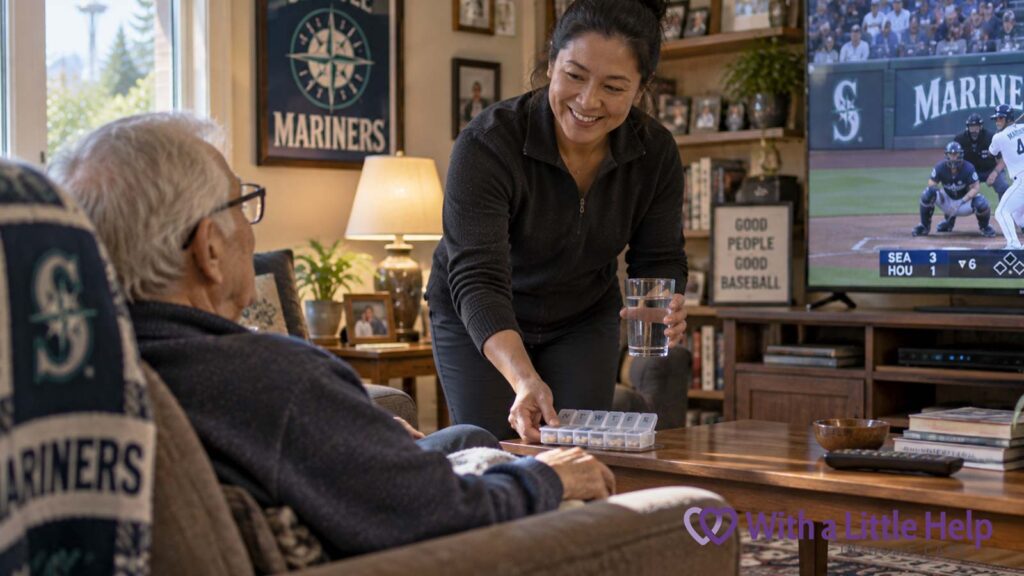
Non-medical caregivers can provide medication reminders as part of a senior’s daily routine.
For example, a caregiver may remind someone that it’s time to take their medication rather than administering medication as a nurse would.
That support can fit naturally into other routines. Breakfast, medications, getting dressed, and starting the day can all become part of a familiar morning schedule.
Building Predictability Into the Day
Routine itself can be valuable, particularly when memory or cognition begins to change.
Regular caregiver visits can help give the day some structure: getting up, eating meals, taking medications as directed, going for a walk, completing personal care, and settling in for the evening.
The caregiver isn’t simply completing individual tasks. They’re helping everyday life continue to work.
Support for Seniors With Memory Loss
In-home care can be particularly valuable for people living with dementia or other forms of memory loss because it allows them to remain in familiar surroundings.
Familiar Routines and Familiar Faces
A senior may forget what day it is while still knowing exactly where the coffee mugs have been kept for 30 years.
Home provides environmental cues and familiarity that can become increasingly valuable as memory changes.
A consistent caregiver can learn the person’s normal routines, preferences, and behaviors. Over time, that familiarity can make assistance feel less disruptive and help the caregiver recognize when something seems different.
Safety and Supervision
Memory loss can also create practical safety concerns.
Someone may forget to use their walker, leave something cooking, become confused about medications, wander, or attempt activities they can no longer safely manage alone.
The appropriate level of supervision depends on the individual, but in-home care can be adjusted as those needs change.
Respite and Support for Family Caregivers
Sometimes the person who most obviously needs help isn’t the senior.
It’s the exhausted spouse or adult child trying to do everything.
Giving Family Caregivers Time Off
Professional care can give family caregivers predictable periods when someone else is responsible for the planned care.
That might allow a spouse to attend an appointment, see friends, run errands, or simply have a few hours when they aren’t actively caregiving.
For adult children, it can mean going to work or spending time with their own families without constantly wondering what’s happening at Mom’s house.
Returning to Being Family
Professional caregivers don’t replace families.
They can take responsibility for some of the work of caregiving so family members don’t have to carry all of it.
A daughter can spend an afternoon talking with her father instead of using the entire visit to do laundry, make meals, and organize the house. A husband can be a husband rather than functioning as his wife’s caregiver around the clock.
That difference can be enormous.
Evening, Overnight, and More Extensive Care
In-home care doesn’t have to end at 5:00 p.m.
Overnight Care
Some seniors manage reasonably well during the day but need additional help at night.
With a Little Help offers overnight care that can provide support with needs such as nighttime mobility, bathroom trips, repositioning, personal care, confusion, and wandering.
Depending on the client’s needs, awake overnight caregivers can remain alert throughout the shift so assistance is available when needed.
Live-In and Around-the-Clock Support
Other seniors need much more extensive support while still wanting to remain at home.
Live-in care can provide around-the-clock support, with the caregiver able to sleep overnight while remaining available to assist as needed.
For families, this creates options between a few hours of weekly assistance and moving a loved one into a facility. Care can increase as needs increase.
What Isn’t Included in Non-Medical In-Home Care?
This distinction causes plenty of confusion.
In-home care and home health care aren’t the same thing.
In-home caregivers provide non-medical assistance with everyday living. Skilled home health services are provided by medical professionals and may include things such as nursing care, wound care, injections, physical therapy, or other clinical services.
That doesn’t mean a caregiver can’t support a client’s medical or therapy routine.
Supporting Physical Therapy Between Visits
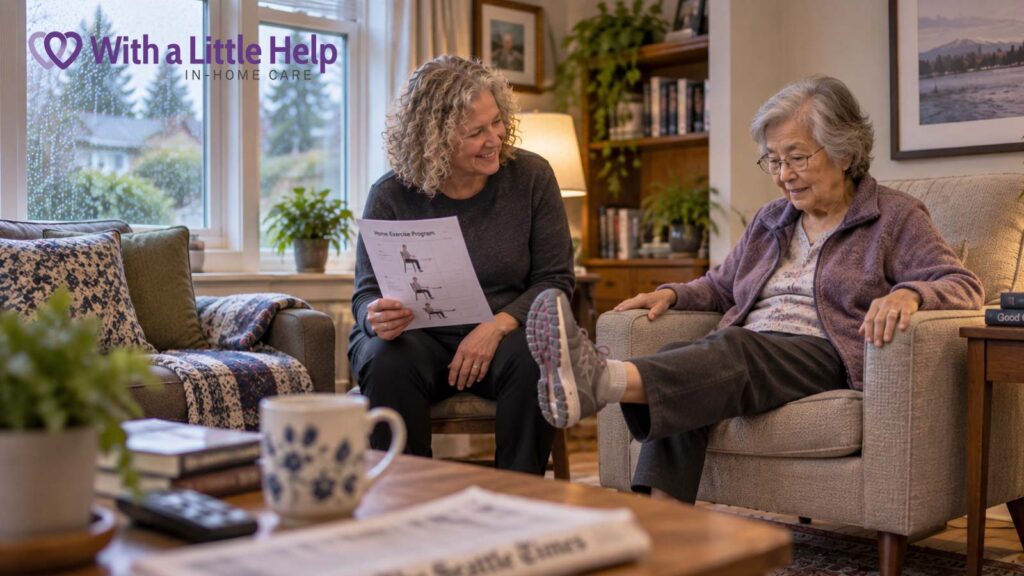
A physical therapist may prescribe exercises for a senior to complete between appointments. An in-home caregiver can help the client follow through with those exercises as directed by the physical therapist.
The distinction is important: the caregiver doesn’t prescribe or develop the exercises. The physical therapist does. The caregiver can then help the senior complete that established exercise routine between PT visits.
That can be particularly useful when someone has exercises they’re supposed to do regularly but benefits from encouragement, reminders, or assistance following the prescribed routine.
A senior can therefore need both skilled care and non-medical in-home care. Someone recovering from surgery, for example, might receive home health visits for medical or therapy needs while an in-home caregiver helps with meals, bathing, dressing, mobility, prescribed PT exercises, and everyday life between those visits.
Understanding the difference helps families ask for the right kind of support.
In-Home Care Isn’t a Menu of Separate Services
This may be the most important thing to understand.
Mom doesn’t necessarily need “meal preparation services” on Monday, “companion care” on Tuesday, and “transportation services” on Wednesday.
She needs care.
During one visit, her caregiver might help her get dressed, make breakfast, remind her about her medication, put a load of laundry in the washer, drive her to an appointment, and come home to have lunch together.
Another client may need an entirely different combination.
That’s why personalized care plans are so important. The services should fit the person rather than requiring the person to fit into a predetermined package.
And those plans can change. A senior who initially needs companionship and a little help around the house may eventually need personal care, transportation, longer shifts, or overnight support.
If you’re exploring in-home care for someone you love, contact With a Little Help to talk about the daily tasks, routines, and challenges where a little help could make life at home easier.
