

12 Oct Parkinson’s Home Care: 10 Ways In-Home Care Can Make Daily Life Easier
Parkinson’s disease doesn’t affect everyone the same way. One person may experience a noticeable tremor but remain physically active for years. Another may struggle with balance, stiffness, fatigue, or movements that suddenly become difficult to initiate.
Even for the same person, abilities can change throughout the day.
That’s one of the challenges of living with Parkinson’s. Something that was relatively easy yesterday, or even this morning, may be considerably harder a few hours later.
But a Parkinson’s diagnosis doesn’t automatically mean someone needs to leave their home, surrender their independence, or have another person managing every aspect of their life.
Parkinson’s home care provides practical assistance with everyday activities, helping people remain comfortable, active, and independent in familiar surroundings.
For families throughout Seattle and the surrounding communities, understanding what in-home care can actually provide is an important part of planning for life with Parkinson’s.
How Does Parkinson’s Disease Affect Daily Life?
Parkinson’s disease is a progressive neurological condition that affects movement and can cause a wide range of other symptoms.
The four movement symptoms commonly associated with Parkinson’s are tremor, muscle stiffness, slowed movement (bradykinesia), and impaired balance or coordination.
However, Parkinson’s can also affect sleep, energy levels, mood, thinking, digestion, and other aspects of daily functioning. Not everyone experiences every symptom, and the condition progresses differently from person to person.
The National Institute on Aging provides a useful overview of Parkinson’s movement symptoms.
For someone living with Parkinson’s, the greatest difficulties may not be the symptoms themselves but the way they interfere with ordinary activities.
Getting dressed takes longer. Standing up from a chair requires more concentration. Preparing dinner becomes exhausting. A nighttime trip to the bathroom feels less secure.
These changes don’t necessarily require full-time assistance. Often, targeted help with particular activities can make a substantial difference.
10 Ways Parkinson’s Home Care Can Help
1. Making Morning Routines Less Difficult
Mornings can be particularly challenging for some people with Parkinson’s.
Stiffness, slowed movement, and difficulty getting out of bed may make the first hour of the day frustrating. Some people also experience periods when their medication hasn’t yet taken full effect.
An in-home caregiver can help someone get out of bed, move safely to the bathroom, wash, dress, and prepare breakfast.
Just as importantly, a caregiver can allow enough time for those activities.
Rushing someone with Parkinson’s can increase frustration and make movement more difficult. A predictable routine, familiar assistance, and a little patience can make mornings considerably more manageable.
Care should follow the person’s abilities and preferences rather than an arbitrary schedule.

2. Helping With Bathing and Personal Hygiene
Bathrooms present particular challenges for people with Parkinson’s.
Wet floors, narrow spaces, slippery surfaces, and the need to step into a shower or bathtub can become hazardous when balance and coordination are affected.
Even tasks such as washing hair, brushing teeth, or shaving may become more difficult when tremors or stiffness interfere with fine motor movements.
Personal care assistance can include preparing the bathroom, helping someone enter or exit the shower safely, assisting with washing and drying, and supporting grooming routines.
The amount of help depends on the individual. Some people need direct physical assistance. Others simply benefit from having someone nearby while they complete most of the task themselves.
The Parkinson’s Foundation recommends practical bathroom adaptations such as grab bars, nonslip surfaces, shower chairs, and handheld showerheads. These changes can complement personal care assistance and make the bathroom easier to use.
Privacy and dignity remain essential. Having Parkinson’s doesn’t change someone’s right to make decisions about their body or how they receive personal care.
3. Making Dressing Easier Without Taking Over
Buttons, zippers, shoelaces, socks, and shirt sleeves can become unexpectedly frustrating when Parkinson’s affects coordination and movement.
Getting dressed may also require standing, bending, reaching, and maintaining balance.
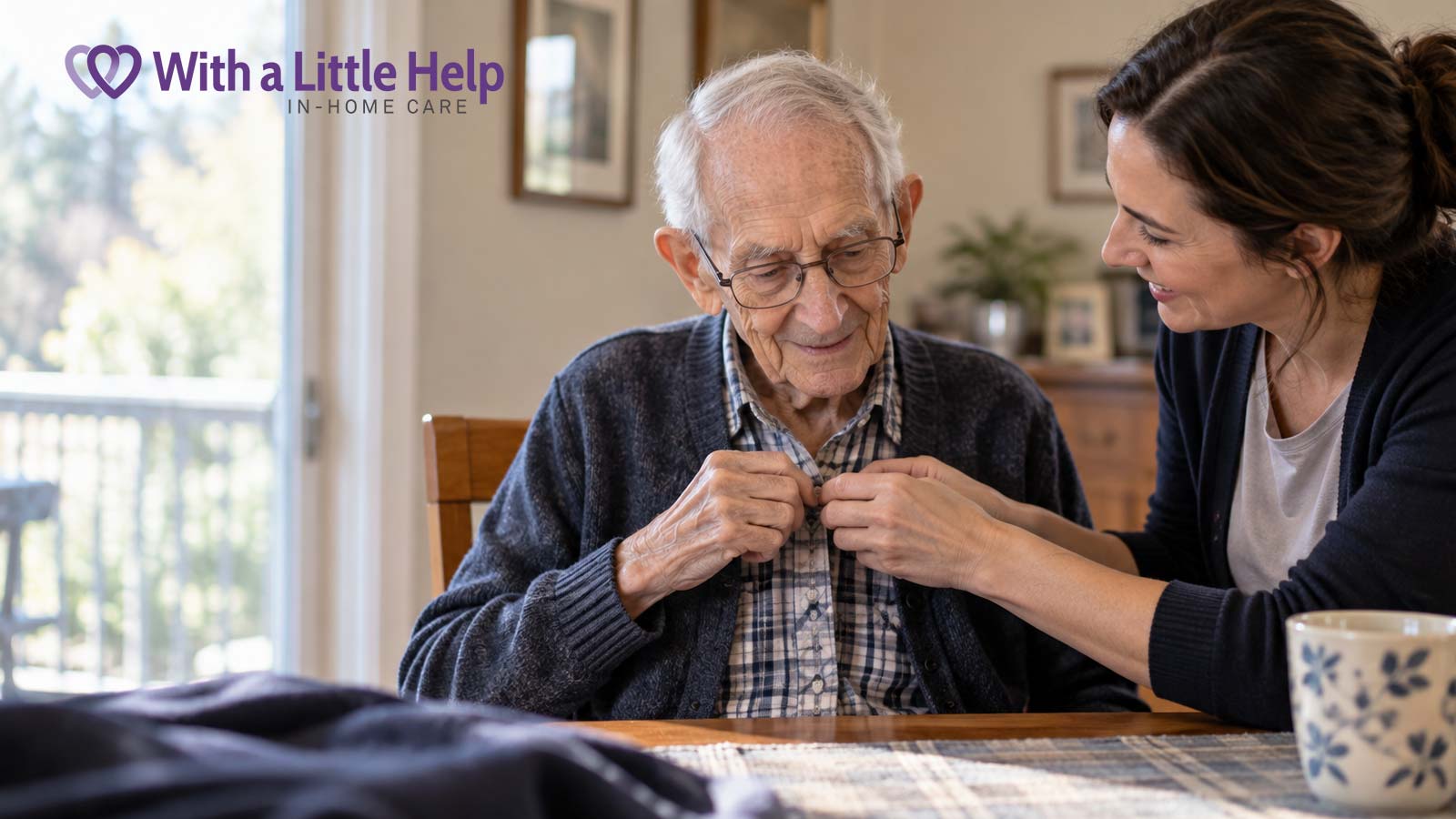
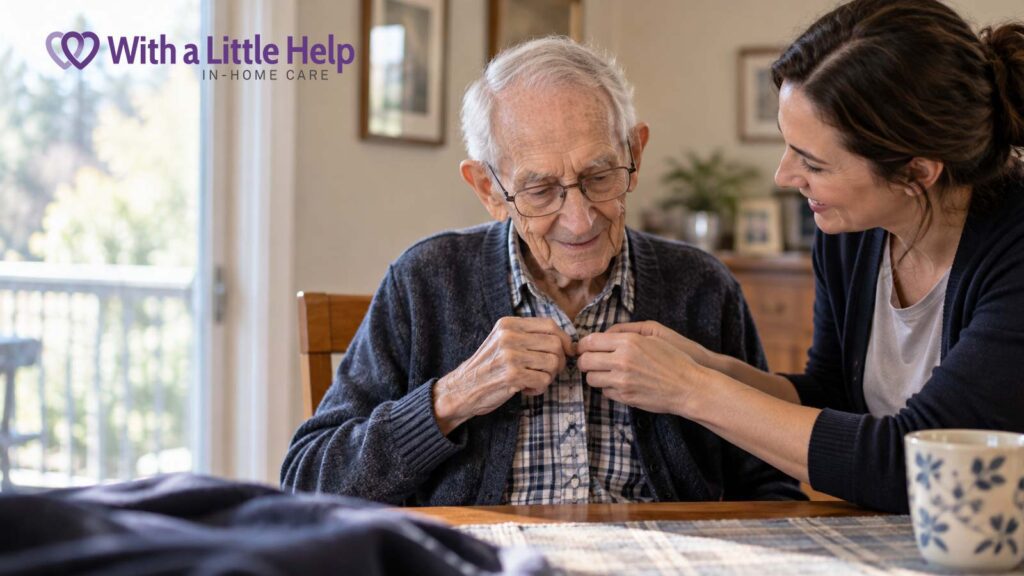
A caregiver can help lay out clothing, assist with difficult fasteners, provide support with socks and shoes, and make sure the person has a safe place to sit.
But daily living assistance shouldn’t automatically mean doing everything.
Someone who can comfortably put on their own shirt may only need help with the buttons. Another person may prefer to choose their clothing and have a caregiver assist with the physical process of getting dressed.
Adaptive clothing and dressing tools can also help. The Parkinson’s Foundation’s dressing guide discusses practical adjustments that can reduce frustration and support independence.
The important thing is preserving the person’s involvement wherever possible.
4. Supporting Safer Movement Around the Home
Walking isn’t always straightforward for someone with Parkinson’s.
Changes in balance, posture, and coordination can make it harder to navigate furniture, turn corners, or move between rooms.
Some people experience freezing of gait, a symptom in which their feet temporarily seem unable to move forward even though they intend to walk.
A caregiver can provide appropriate mobility assistance, help maintain clear pathways, and support safer movement during daily activities.
They can also help someone use prescribed mobility aids and follow established recommendations from their physical therapist or healthcare team.
A home safety assessment by a qualified professional may identify useful changes, such as improving lighting, removing trip hazards, or adjusting furniture arrangements.
The Parkinson’s Foundation offers a detailed home safety guide covering common hazards and possible adaptations.
In Seattle, where wet shoes, slippery entryways, and dim winter afternoons are familiar concerns, practical attention to home safety can be especially useful.
5. Helping With Meals and Everyday Nutrition
Parkinson’s can make preparing and eating meals more complicated.
Tremors may interfere with chopping vegetables or handling utensils. Stiffness and fatigue can make standing at the kitchen counter difficult. Some people find that preparing a meal requires more energy than they have available.
An in-home caregiver can help with grocery shopping, meal preparation, cooking, serving food, and cleaning up afterward.
That doesn’t mean the person with Parkinson’s has to become a spectator in their own kitchen.
Someone who enjoys cooking might continue choosing recipes, seasoning food, or participating in the parts of meal preparation they can comfortably manage.
There are also medical considerations. Parkinson’s can sometimes cause swallowing difficulties, and certain medications may have specific timing or dietary instructions. Those issues require guidance from the person’s healthcare team.
Caregivers can help follow established meal routines and dietary instructions, but they don’t diagnose swallowing problems or develop medical nutrition plans.
6. Keeping Medication Routines Consistent
Medication timing can be particularly important for people with Parkinson’s.
Some medications help control movement symptoms for a limited period. When their effects begin to wear off, stiffness, slowness, or other symptoms may become more noticeable.
A missed or delayed dose can therefore affect much more than the medication schedule. It may disrupt getting dressed, eating, moving around the house, or attending an appointment.
Non-medical caregivers can provide medication reminders and help clients maintain established routines within their authorized scope of care.
They may also help someone keep track of daily schedules and communicate concerns to family members or appropriate healthcare professionals.
However, caregivers do not prescribe medications, change dosages, or make medical decisions.
The Parkinson’s Foundation emphasizes the importance of taking Parkinson’s medications at their prescribed times, particularly as symptoms become more complex.
For someone whose daily activities depend on consistent medication timing, a reliable routine can be especially valuable.
7. Supporting Physical Therapy Exercises Between Appointments
Exercise is an important part of managing Parkinson’s disease.
Depending on the person’s abilities and healthcare recommendations, physical activity may help support mobility, balance, strength, flexibility, and overall well-being.
Physical therapists can develop individualized exercise programs that account for Parkinson’s symptoms and other health considerations.
But there’s a practical challenge: the exercises prescribed during therapy appointments often need to be repeated at home.
A caregiver can help someone follow exercises already prescribed by their physical therapist. This might involve preparing a safe space, bringing necessary equipment within reach, following written instructions, or helping the person maintain an established routine.
The caregiver doesn’t design the exercises or replace the physical therapist.
For families trying to maintain consistency between professional appointments, that additional support can be useful.
The Parkinson’s Foundation offers information about exercise and Parkinson’s, including different types of physical activity and the importance of individualized recommendations.

8. Making Appointments, Errands, and Social Activities More Accessible
Parkinson’s can gradually change someone’s relationship with the world outside their home.
Driving may become difficult or unsafe. Walking through a large grocery store may be exhausting. Getting to a medical appointment can require considerable planning.
As a result, people sometimes begin limiting activities they previously enjoyed.
In-home care can help preserve those connections.
As part of a broader care plan, caregivers can provide transportation and assistance with appointments, errands, shopping, and other outings.
That might mean helping someone get to a medical appointment in Seattle, visit a favorite neighborhood café, pick up groceries, or spend time with friends.
And companionship doesn’t always require leaving the house.
Conversation, shared hobbies, games, music, and ordinary social interaction can help someone remain engaged with the activities and relationships they enjoy.
Parkinson’s may change how a person participates in life. It doesn’t eliminate their need or desire to participate.
9. Providing Help During Difficult Evenings and Nights
Parkinson’s doesn’t stop presenting challenges when the sun goes down.
Some people experience sleep disturbances, stiffness, difficulty turning over in bed, or problems getting up during the night.
Bathroom trips can become particularly concerning when someone is sleepy, unsteady, or experiencing a period of reduced mobility.
For a spouse or family caregiver, nighttime assistance can also become exhausting.
If someone needs help several times each night, the family member providing that help may go weeks or months without adequate sleep.
Depending on the circumstances, evening assistance, awake overnight care, or live-in care may provide additional support.
Awake overnight care means a caregiver remains awake and available throughout the scheduled shift. Live-in care follows a different arrangement in which the caregiver sleeps overnight but is available when needed.
Not everyone with Parkinson’s needs overnight care. But when nighttime mobility or personal care becomes difficult, families should know that additional options exist.
A person may be comfortable and independent for much of the day while needing considerably more help at night.
10. Giving Family Caregivers Reliable Relief
Parkinson’s affects more than the person who receives the diagnosis.
Spouses, adult children, siblings, and other family members often become increasingly involved in daily care.
At first, the assistance may be relatively minor. Someone helps with transportation or takes over grocery shopping.
Later, they may be helping with dressing, bathing, mobility, meals, appointments, and nighttime routines.
The responsibilities can accumulate so gradually that nobody notices how demanding the arrangement has become.
Regularly scheduled respite care allows a professional caregiver to take over agreed-upon responsibilities for part of the day or week.
That gives family members time to work, attend appointments, maintain friendships, exercise, rest, or simply spend time away from caregiving responsibilities.
It can also improve the time they spend together.
A husband who has been responsible for every aspect of his wife’s personal care may welcome the opportunity to sit with her over breakfast without also worrying about the next task.
Family members can remain deeply involved without being responsible for everything.
Why Personalized Parkinson’s Home Care Is So Important
A diagnosis alone isn’t enough to determine someone’s care needs.
Two people living with Parkinson’s may have entirely different symptoms, abilities, preferences, and routines.
Even within the same household, needs may change from morning to evening.
Parkinson’s Symptoms Can Fluctuate
Some people experience periods when movement is easier and other periods when symptoms become more pronounced.
These changes may relate to medication timing, fatigue, stress, or other factors.
A care plan should account for those patterns rather than assuming the person needs the same amount of assistance at every moment.
For example, someone might benefit from help getting ready in the morning but manage most afternoon activities independently.
Another person may be comfortable during the day but need support with evening routines or nighttime mobility.
Independence Should Remain Part of the Plan
There’s a difference between helping someone complete a task and unnecessarily taking that task away from them.
When a person can safely participate in dressing, meal preparation, grooming, or other daily activities, they should have the opportunity to do so.
Sometimes that means allowing more time. Sometimes it means providing a little physical assistance. Sometimes it means adapting the environment or using equipment recommended by a healthcare professional.
Care should make life easier without unnecessarily reducing someone’s control over it.
Care Needs Can Change Over Time
Parkinson’s is progressive, but progression varies considerably.
Some people maintain substantial independence for many years. Others experience changes that require more frequent assistance.
A personalized care plan can begin with a few visits each week and evolve if the person’s needs change.
Families don’t have to choose between doing everything themselves and arranging around-the-clock care.
There are many possibilities in between.
When Should Families Consider Parkinson’s Home Care?
There’s no universal point at which someone with Parkinson’s suddenly needs professional assistance.
However, certain changes may suggest that additional support would be helpful.
Consider whether:
- Bathing, dressing, or grooming has become difficult or unsafe.
- Falls, near-falls, or freezing episodes are creating safety concerns.
- Meal preparation and household tasks are becoming exhausting.
- Medication routines are becoming difficult to maintain.
- The person is avoiding outings because mobility or transportation is challenging.
- Physical therapy homework or established daily routines are difficult to maintain independently.
- Nighttime bathroom trips or getting out of bed require assistance.
- A spouse or family caregiver is becoming physically or emotionally exhausted.
- The person is increasingly isolated because everyday activities require too much effort.
- Family members are regularly rearranging work and other responsibilities to provide essential care.
These aren’t necessarily signs that someone needs extensive assistance.
They may simply indicate that a few hours of help could make everyday life more manageable.
And it’s worth discussing support before a fall, injury, or exhausted family caregiver forces an urgent decision.
Parkinson’s Home Care in Seattle: How With a Little Help Can Help
Living with Parkinson’s requires flexibility. What works well today may need adjusting tomorrow, and the assistance someone needs may differ considerably from another person’s.
That’s why With a Little Help approaches in-home care as a personalized relationship rather than a fixed list of tasks.
For Seattle-area adults living with Parkinson’s, care can combine personal assistance, meal preparation, light housekeeping, companionship, transportation as part of a care plan, support with established routines, and other practical services.
Some clients may need help with a demanding morning routine. Others may benefit from regular visits that make household tasks and outings easier. Families managing more substantial needs may want to explore overnight or live-in care.
The care plan can evolve as circumstances change.
Just as importantly, a familiar caregiver can learn the person’s preferences, routines, and the ways Parkinson’s affects their particular day. That familiarity can make assistance feel less intrusive and more like a natural part of everyday life.
Parkinson’s may change how someone moves through the world, but it doesn’t erase their personality, interests, relationships, or desire for independence.
If you or someone you love is living with Parkinson’s in the Seattle area, contact With a Little Help to discuss a personalized home care plan. A conversation about everyday challenges can be the first step toward finding practical support that makes life at home easier.
