

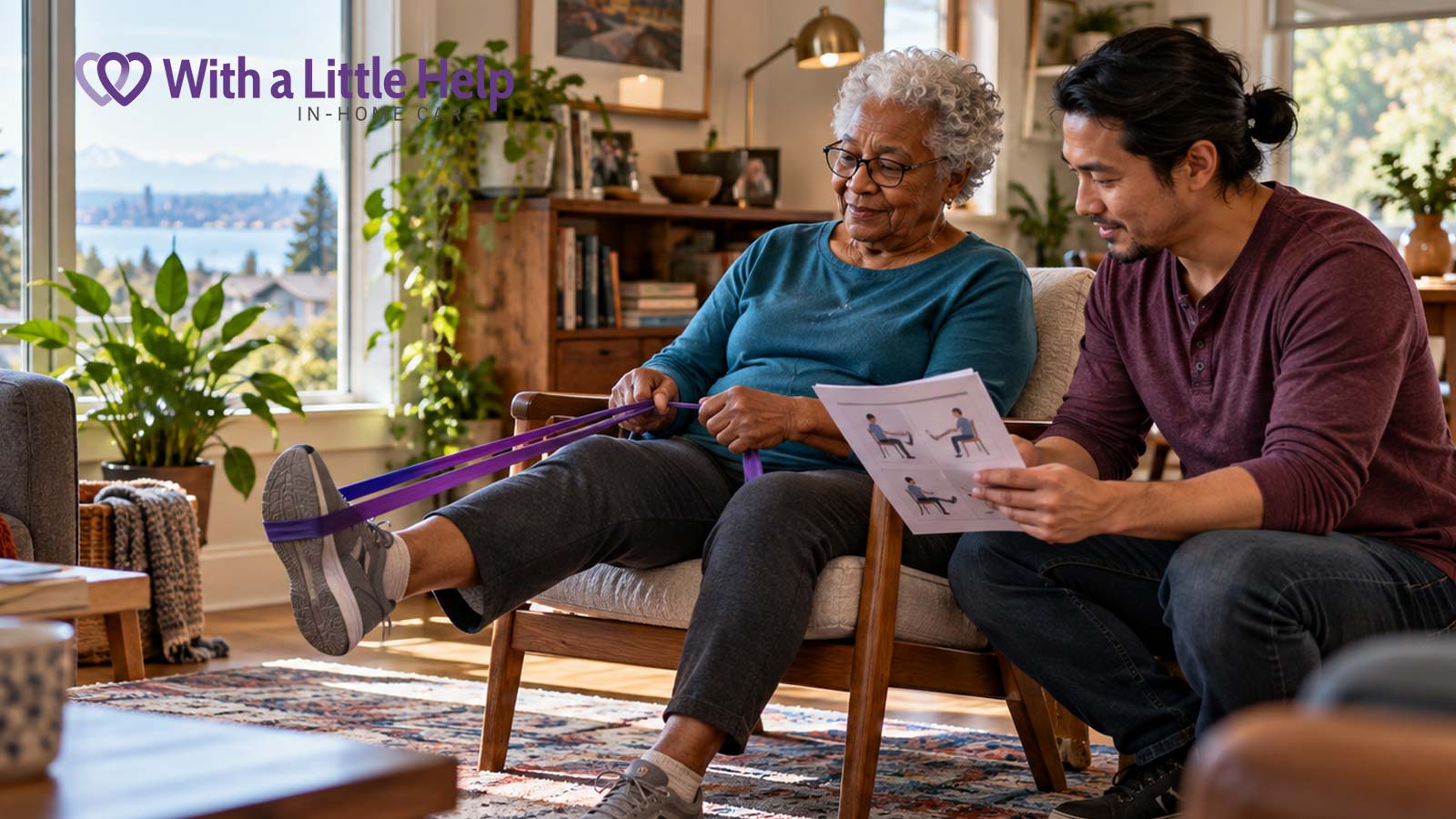
24 Oct Physical Therapy for Seniors at Home: 7 Ways Caregivers Can Support Recovery
A physical therapist can develop an excellent exercise program. They can identify problems with strength, balance, and mobility, demonstrate the right movements, and help someone work toward meaningful goals.
But what happens between appointments?
For many older adults, that’s where things get complicated.
Exercises that seem manageable with a therapist present can be harder to complete alone. Equipment needs to be set up. Instructions have to be remembered. Someone may feel tired, uncertain, or worried about losing their balance. And when daily life gets busy, physical therapy homework can easily fall to the bottom of the list.
Physical therapy for seniors doesn’t end when the appointment is over. Following a prescribed exercise program at home is often an important part of rehabilitation, maintaining mobility, or managing a long-term condition.
While in-home caregivers aren’t physical therapists, they can provide practical support that helps seniors follow their prescribed routines more consistently.
For Seattle-area families, that additional assistance can help bridge the gap between professional therapy sessions and everyday life at home.
Physical Therapy for Seniors Isn’t Just About Recovering From an Injury
When people think about physical therapy, they often picture someone recovering from a broken hip, knee replacement, fall, or hospital stay.
Those are certainly common reasons older adults receive physical therapy. But rehabilitation after an acute injury is only part of the picture.
Physical therapy can also help people manage ongoing conditions, maintain physical abilities, and address changes that come with aging.
Recovery After Surgery, Injury, or Hospitalization
Following surgery or an injury, a physical therapist may prescribe exercises to help restore strength, improve range of motion, and rebuild confidence with everyday movements.
The goals might include walking safely, climbing stairs, getting out of bed, or standing up from a chair.
Some people need therapy for a relatively short period. Others require a longer rehabilitation process, particularly when recovery is complicated by other health conditions.
Managing Chronic and Progressive Conditions
For someone living with Parkinson’s disease, multiple sclerosis, arthritis, or another long-term condition, physical therapy may be part of an ongoing care plan.
The objective isn’t necessarily to recover an ability that was temporarily lost.
Instead, therapy may focus on maintaining strength, improving movement, managing symptoms, addressing balance difficulties, and helping someone continue doing everyday activities.
For example, the Parkinson’s Foundation recommends physical therapy as part of Parkinson’s management, including early evaluation and continued reassessment as needs change.
Someone with Parkinson’s may work with a physical therapist for years, adjusting exercises and goals as the condition progresses.
Maintaining Mobility and Independence
Physical therapy can also help older adults address declining strength, reduced flexibility, changes in walking, or concerns about falling.
Not every person receiving therapy is recovering from something dramatic.
Sometimes the goal is to keep getting out of a favorite chair without assistance, continue walking around the neighborhood, or feel more confident navigating the stairs at home.
These may sound like small accomplishments, but they can make an enormous difference in someone’s ability to live independently.
Can In-Home Caregivers Help With Physical Therapy?
Yes. In-home caregivers can help seniors follow exercises and routines prescribed by a licensed physical therapist, provided the assistance falls within the caregiver’s training and authorized responsibilities.
However, there’s an important distinction between supporting physical therapy and providing it.
A physical therapist evaluates the person’s condition, develops the treatment plan, selects appropriate exercises, determines how frequently they should be performed, and adjusts the program as needed.
An in-home caregiver doesn’t take over those clinical responsibilities.
Instead, the caregiver can help with practical aspects of following an established program, such as preparing the exercise area, keeping instructions accessible, offering reminders, and providing appropriate assistance.
If an exercise causes pain, dizziness, unusual fatigue, or other concerning symptoms, the caregiver shouldn’t improvise a solution or modify the program independently. The exercise should be stopped when appropriate, and concerns should be referred to the physical therapist or healthcare team.
At With a Little Help, caregivers can assist clients with physical therapy homework prescribed by their therapists. That support can be incorporated into a broader personalized care plan that addresses other everyday needs.

7 Ways In-Home Caregivers Can Support Physical Therapy for Seniors
1. Helping Seniors Maintain a Consistent Exercise Routine
Consistency can be one of the biggest challenges with physical therapy at home.
Someone might leave an appointment fully intending to complete their exercises every day. But by the following morning, there are plenty of reasons to postpone them.
Perhaps they’re tired. Maybe they don’t feel like getting started. The exercise sheet is somewhere in the bedroom, and the equipment is in a closet.
Before long, several days have passed.
An in-home caregiver can help make prescribed exercises part of a familiar routine.
For example, a client might prefer completing their exercises after breakfast, when they’re dressed and feeling more alert. Another may find that a late-afternoon session works better.
The caregiver can help the person prepare at the agreed time, locate their instructions, and follow the schedule established by their therapist.
This is especially useful for seniors who benefit from predictable daily routines.
The goal isn’t to pressure someone into exercising. It’s to remove some of the everyday obstacles that make consistency difficult.
2. Preparing a Safer, More Comfortable Exercise Space
A physical therapist may prescribe exercises that require a chair, resistance band, small weights, or other equipment.
But the average living room wasn’t designed as a rehabilitation facility.
Furniture gets moved. Rugs curl at the edges. Pets wander through the room. Someone leaves a laundry basket exactly where it shouldn’t be.
Before a senior begins their prescribed exercises, a caregiver can help prepare the space according to the therapist’s instructions.
That might include:
- Clearing unnecessary clutter and trip hazards
- Making sure lighting is adequate
- Positioning an appropriate chair or other prescribed equipment
- Bringing exercise instructions and supplies within reach
- Ensuring recommended mobility aids are available
- Keeping frequently used items nearby so the person doesn’t have to make unnecessary trips
In Seattle, where dark winter mornings and afternoons can make indoor lighting especially important, a little preparation can make a home exercise routine more comfortable.
Caregivers shouldn’t decide whether an exercise is safe or substitute equipment without professional guidance. But they can help make sure the environment is ready for the program the therapist has prescribed.
3. Helping Seniors Follow Their Therapist’s Instructions
Remembering a series of unfamiliar movements isn’t always easy.
A physical therapist may demonstrate several exercises during an appointment, explaining how to position the body, how many repetitions to complete, and when to stop.
The senior may understand everything during the session but struggle to recall the details later.
Written instructions can help, particularly when they include photographs or illustrations. Even so, someone may appreciate assistance keeping track of the sequence.
An in-home caregiver can help by reviewing the therapist’s written instructions with the client, locating the correct equipment, and helping them follow the established routine.
For example, a therapist might prescribe a series of seated movements followed by a short walking exercise. The caregiver can help the client refer to the instructions and remember which activity comes next.
The caregiver isn’t teaching new exercises or correcting movement technique independently. If the instructions are unclear or the person is having difficulty completing a movement as prescribed, the physical therapist should provide additional guidance.
This division of responsibilities allows the therapist to direct treatment while the caregiver helps the client follow the plan at home.
4. Providing Encouragement Without Pushing Too Hard
Physical therapy can be frustrating.
Progress isn’t always obvious, and improvement may happen gradually. Some days, a person feels stronger and more confident. Other days, familiar movements seem unusually difficult.
For someone recovering from an injury, that inconsistency can be discouraging.
For someone living with a progressive condition such as Parkinson’s, it may be part of managing symptoms that fluctuate throughout the day.
A familiar caregiver can offer encouragement, patience, and companionship during prescribed exercises.
Sometimes that means helping someone get started. Sometimes it means allowing plenty of time to complete a movement without rushing.
And sometimes it means recognizing that the person isn’t feeling well and helping communicate that concern to the appropriate healthcare professional.
Encouragement should never become pressure to ignore pain, exhaustion, or other warning signs.
The purpose of support is to help someone participate in their prescribed program, not to push them beyond the limits established by their therapist.
5. Supporting Mobility During Everyday Activities
Physical therapy doesn’t exist in isolation from the rest of someone’s day.
A person may be working with a therapist to improve their ability to stand, walk, maintain balance, or move safely around the home.
Those same movements are part of ordinary activities.
Getting out of bed. Walking to the kitchen. Standing up after lunch. Moving between rooms. Getting into a car.
An in-home caregiver can provide appropriate mobility assistance during these activities while following the recommendations established by the person’s healthcare team.
For example, someone recovering from a hospital stay may need help getting up from a chair or walking to the bathroom. A person with Parkinson’s may require additional time and assistance when initiating movement.
Caregivers can also help clients use prescribed mobility aids appropriately and keep frequently traveled areas free of obstacles.
However, ordinary mobility assistance shouldn’t be confused with specialized physical therapy techniques. A caregiver should only provide physical support that falls within their training and the client’s established care plan.
The broader benefit is that seniors can receive assistance throughout the day, not just during scheduled exercise sessions.

6. Helping Families Notice Changes and Communicate Concerns
A physical therapist sees a client during appointments. Family members and caregivers may observe how that person manages everyday life between visits.
Those observations can provide useful information.
Perhaps a senior who previously walked comfortably to the kitchen now seems hesitant. Maybe getting out of a chair has become more difficult. Someone with Parkinson’s might experience noticeably different mobility at certain times of day.
An in-home caregiver may notice changes such as:
- Increased difficulty standing or walking
- Greater fatigue during familiar activities
- New hesitation around stairs or uneven surfaces
- Changes in balance or confidence
- Difficulty completing previously manageable routines
- Increased reliance on furniture or mobility aids
These observations aren’t diagnoses.
But when communicated appropriately to the client, family, or healthcare team, they may help identify when a reassessment is needed.
A therapist can then determine whether exercises, mobility recommendations, or other aspects of treatment should change.
This is particularly important for people managing progressive conditions, where physical abilities may change gradually over time.
7. Making the Rest of the Day More Manageable
Here’s an aspect of physical therapy support that families sometimes overlook.
Completing prescribed exercises is only one part of the day.
Someone recovering from surgery may have limited energy. A person living with Parkinson’s may find that movement becomes more difficult at certain times. An older adult working to rebuild strength may simply become tired more quickly than before.
Now add all the ordinary responsibilities of living at home.
Meals still need to be prepared. Laundry needs washing. Groceries need buying. Appointments need arranging. The kitchen doesn’t clean itself.
When those tasks become physically demanding, they can compete with the time and energy someone needs for their prescribed exercises.
In-home care can help reduce that burden.
A caregiver might prepare lunch, take care of light housekeeping, help with laundry, or provide transportation to a therapy appointment as part of a broader care plan.
This doesn’t replace physical therapy. It helps make room for it.
And for family caregivers who have been handling all those responsibilities themselves, professional assistance with activities of daily living can provide some much-needed relief.
Physical Therapy for Seniors With Parkinson’s and Other Ongoing Conditions
Physical therapy is often described in terms of recovery. Someone gets hurt, receives treatment, completes rehabilitation, and returns to their previous level of activity.
But that isn’t everyone’s experience.
For people with Parkinson’s and certain other chronic conditions, physical therapy may remain useful over many years.
Parkinson’s Disease and Ongoing Physical Therapy
Parkinson’s can affect walking, balance, posture, coordination, and the ability to initiate movement.
Physical therapists with experience treating Parkinson’s can develop programs addressing these challenges and adjust them as the person’s abilities change.
The Parkinson’s Foundation’s physical therapy guidance emphasizes the value of exercise and physical therapy throughout the course of the disease, rather than waiting until significant mobility problems develop.
Home exercise programs may form part of that ongoing approach.
A caregiver can help someone follow the prescribed routine between appointments, prepare the exercise area, and maintain familiar daily activities.
Because Parkinson’s symptoms can fluctuate, the therapist may also need to consider when exercises are most appropriate. Caregivers should follow that guidance rather than independently changing the program.
Arthritis, Chronic Pain, and Reduced Mobility
People living with arthritis or other conditions affecting joints and movement may receive physical therapy to improve strength, mobility, and everyday function.
The therapist may prescribe exercises that help the person maintain movement or work toward specific goals.
An in-home caregiver can support the established routine while also helping with daily tasks that have become physically demanding.
For example, someone with painful knees may be able to complete their prescribed exercises but struggle with laundry, grocery shopping, or standing long enough to prepare dinner.
Assistance with those tasks can make life at home more manageable without unnecessarily taking away activities the person can still perform.
Long-Term Neurological and Mobility Conditions
Some people live with conditions that affect strength, coordination, endurance, or balance over an extended period.
Physical therapy may focus on maintaining abilities, adapting to changes, and helping the person continue participating in daily life.
In these circumstances, success doesn’t always mean returning to a previous level of function.
It may mean maintaining an ability longer, improving confidence, or finding safer ways to complete familiar activities.
A personalized in-home care plan can complement those goals by providing practical assistance where it’s needed.

What In-Home Caregivers Cannot Do
It’s important for families to understand the limits of non-medical in-home care.
A professional caregiver can support a prescribed exercise routine, but they aren’t a substitute for a licensed physical therapist.
In-home caregivers do not independently:
- Evaluate or diagnose physical conditions
- Develop physical therapy treatment plans
- Prescribe new exercises
- Change the frequency, intensity, or difficulty of prescribed exercises
- Provide specialized rehabilitation techniques outside their training and authorized responsibilities
- Determine whether a client is medically ready to resume particular activities
Those decisions belong to qualified healthcare professionals.
If a client is having trouble completing their prescribed exercises, the answer isn’t for the caregiver to invent an easier or more challenging version.
Instead, the physical therapist should be consulted about appropriate adjustments.
This distinction protects the client while allowing caregivers to provide useful support within their proper role.
How Can Families Make Physical Therapy at Home More Successful?
A good starting point is making sure everyone understands the plan.
The senior, physical therapist, family members, and in-home caregivers should know what the therapist has recommended and what assistance is appropriate.
A few practical steps can help:
- Ask for clear written instructions. Exercise descriptions, photographs, and prescribed schedules can make the program easier to follow.
- Clarify what assistance is appropriate. If the client needs help positioning equipment or moving safely, the therapist should explain what a non-medical caregiver may do.
- Choose a realistic routine. Consider the person’s energy levels, other appointments, and the times of day when movement is easiest.
- Keep communication open. Make sure the client and relevant caregivers know how to report difficulties or changes.
- Review the program when needs change. Exercises that were appropriate several months ago may need reassessment, especially for someone with a progressive condition.
For Seattle families coordinating care across several households, or adult children managing a parent’s care from outside Washington, clear communication can also help everyone understand how the person is managing between appointments.
The physical therapist remains responsible for treatment decisions. In-home caregivers and family members help support the routine around those decisions.
Supporting Physical Therapy for Seniors at Home in Seattle
The benefits of physical therapy often depend on what happens outside the therapist’s office.
A carefully designed program needs to fit into real life, with all its competing responsibilities, changing energy levels, and occasional difficult days.
That’s where With a Little Help can provide valuable support.
Our Seattle-area caregivers can help clients follow exercises prescribed by their physical therapists while also assisting with personal care, mobility, meals, light housekeeping, transportation as part of a care plan, and other everyday needs.
For someone recovering from surgery or hospitalization, that might mean additional assistance during a demanding rehabilitation period.
For someone living with Parkinson’s or another ongoing condition, it may mean reliable support with established routines over months or years.
And for families who have been trying to manage everything themselves, professional in-home care can help distribute responsibilities without removing them from their loved one’s life.
Physical therapy for seniors is about more than completing a list of exercises. It’s about helping people maintain or regain the abilities they need to participate in everyday life.
With the right professional treatment and practical support at home, seniors can continue working toward those goals while receiving assistance with the parts of life that have become difficult.
Contact With a Little Help to discuss personalized in-home care in the Seattle area. Whether your loved one is recovering from an injury or managing a long-term condition, we can help build a care plan that supports their daily routines and complements the treatment provided by their healthcare professionals.
